Have you ever wondered how a word gets into the dictionary?
Does one person decide, or does it have to go through a number of people before being granted permission to be published?
In this article, we will be looking at how a word gets into the dictionary.
So, how does it get into the dictionary then?

To put it simply, a word gets into the dictionary when it becomes a popularly used word.
New words, such as slang and abbreviations, are added to the dictionary once they start to appear across a substantial number of sources and are regularly spoken.
Once a word is commonly used and there is a shared understanding of its meaning, it can be considered for addition to the dictionary.
The process is not instantaneous, though, and can take years for a word to appear in the dictionary.
Who puts a word in the dictionary?

The name of someone who puts together words in a dictionary is a lexicographer.
A lexicographer will monitor the usage of a new word across printed material, online, and spoken word.
Firstly, they collect information about where the word was written, printed, or heard, along with its contextual meaning.
From this, a research database is created, and researchers actively seek words across different backgrounds.
Once adequate evidence has been collated and a solid meaning has been established, the word can be put forward for inclusion in the latest edition of the dictionary.
The Oxford English Dictionary is updated four times a year.
Is there just one dictionary?

There is more than just one dictionary, but in English, the Oxford English Dictionary is the most reliable and well-established.
Oxford Dictionaries have been around for a very long time, containing around 600,000 words and 3 million quotations.
When Oxford began creating its first dictionary, it estimated it would take around 10 years to complete.
The word “ant” was reached after five hard-working years, and they realized it was an ambitious task.
They began work in August 1879, and it wasn’t until 1928 that the final volume was published, taking them almost 50 years to complete.
Can a word be taken out of the dictionary?

It is very uncommon for a word to be removed from the dictionary.
Oxford English Dictionaries claim that they have never removed a word from their dictionaries.
Instead, if a word has become outdated or the meaning has developed or changed, the word will be labeled as obsolete.
The concept of the dictionary is to be a record of all words that have ever existed in the language it is documenting.
For example, if you are reading a book from 1920 and there is a word you don’t recognize, you can use the dictionary to find out.
Why was the dictionary invented?

The desire to record language has existed for thousands of years, with the first non-alphabetical dictionary written in 1582 by Richard Mulcaster.
This dictionary contained 8,000 English words, but the book included only those considered complex.
Later, the first full English dictionary was written in 1604 by Robert Cawdrey. These first books were documents of language and the words used at the time.
The idea was to record the English language with its word meanings, so there would be an ultimate record that everyone could access.
Much later in 1857, the Philological Society of London decided there should be a record of all words that have been used in the English language since the 12th Century.
This was when the idea of the Oxford English Dictionaries was born.
Are more words added nowadays than before?
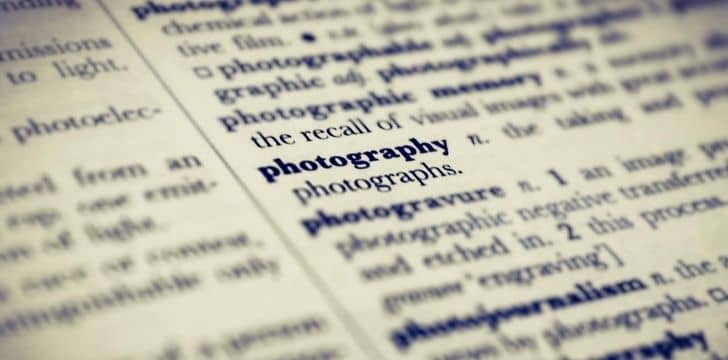
On average between 500-1000 words are added to the Oxford dictionary every year.
It might feel like more words are added to the dictionary nowadays than compared with the 20th Century, but this isn’t necessarily the case.
One possibility is that as our connections and communication have developed, our ability to identify new words has become easier, and therefore, it may appear that there are more new words today.
In conclusion, any word you can imagine could be added to the dictionary; it just needs to become popular first.
Once a word is commonly used across a variety of platforms by a diverse group of people, it can then be considered for inclusion in the dictionary.
It also has to have an established meaning, so it can take years for this to become clear.