On screen, black holes are often portrayed as giant cosmic vacuum cleaners that swallow everything in their path.
But in reality, black holes aren’t “holes” but regions of space where gravity is extremely strong. They sound terrifying, but much of the fear stems from how misunderstood they are.
In the next few minutes, you’ll learn some interesting facts about black holes, including what they are, how we spot them, and why most of them aren’t a danger to us at all.
There could be millions of them in our galaxy.
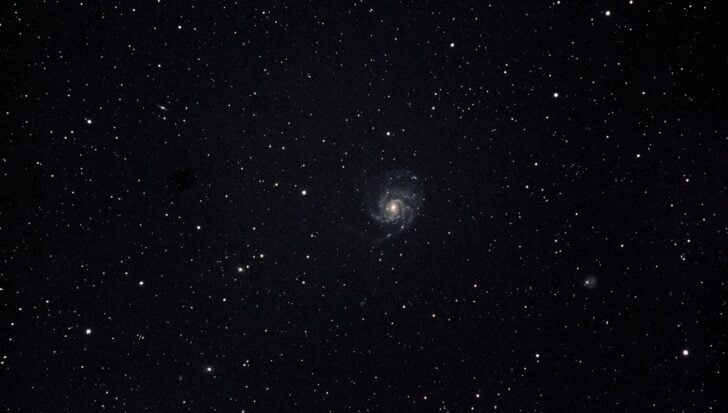
Scientists estimate the Milky Way could contain up to around 100 million black holes, though most would be hard to detect.
Many form when massive stars run out of fuel and collapse. Astronomers often group them into stellar-mass, intermediate-mass, and supermassive black holes based on their size and how they’re formed.
You can’t see a black hole.
If there’s one thing movies get right, it’s that light can’t escape from inside a black hole’s event horizon. That’s why black holes themselves are “invisible,” even though their gravity can dramatically affect nearby matter.
Our eyes need light to see, and a black hole doesn’t shine the way a star does. For a long time, scientists studied black holes by watching nearby stars and the behavior of hot gas.
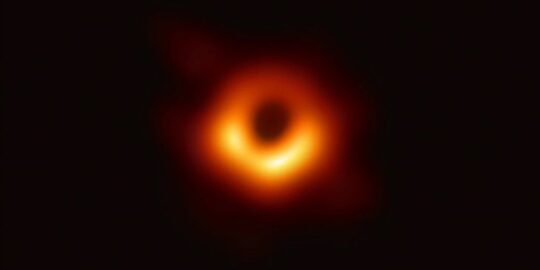
The Event Horizon Telescope collected the key observations in 2017, and the first black hole image was released on April 10, 2019.
Black holes are only dangerous if you get too close.
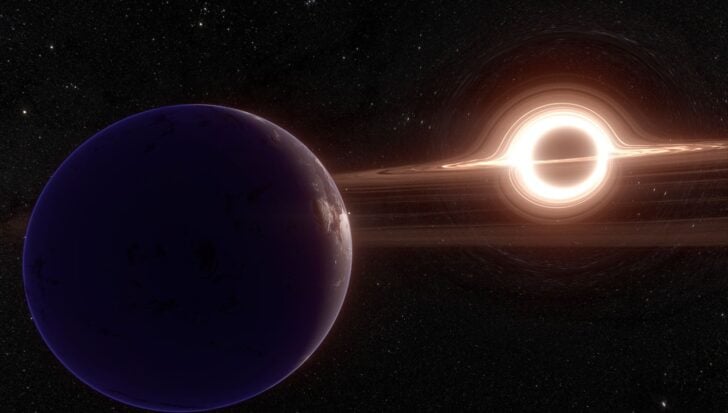
As scary as black holes sound, you don’t really have to worry about them. They only become a serious problem if you get extremely close.
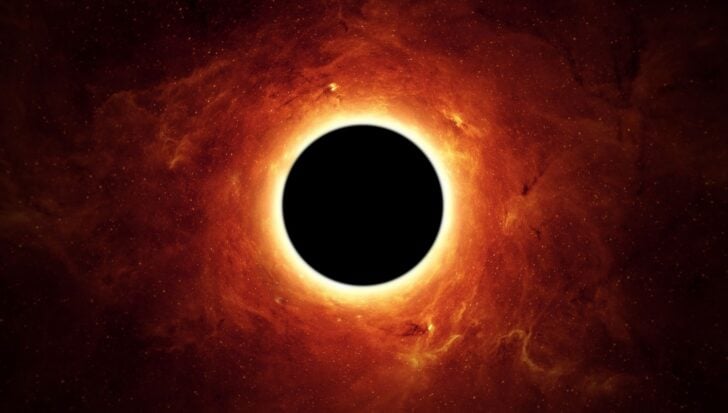
The event horizon is the boundary where escape becomes impossible, because even light can’t get out.
If you replaced our Sun with a black hole of the same mass, Earth wouldn’t get “sucked in.” It would keep orbiting in roughly the same way, because the gravitational pull at Earth’s distance would be similar.
There’s no black hole close enough to threaten Earth.
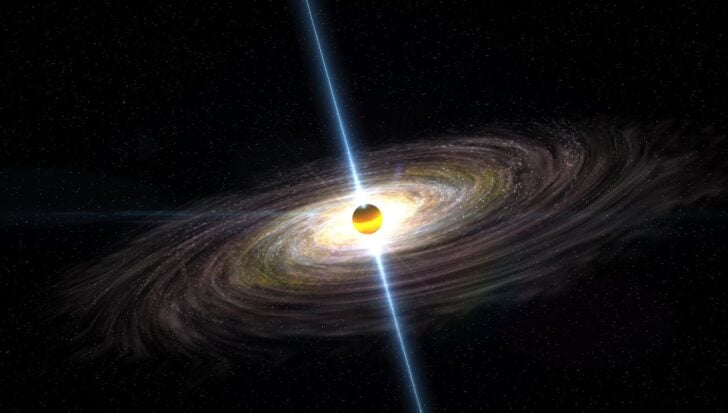
There are no known black holes in our solar system. The closest known black hole system, Gaia BH1, is roughly 1,560 to 1,600 light-years away.
Gaia BH1 was reported in 2022 and is estimated to be about 10 times the Sun’s mass. It isn’t a threat because it’s far away and appears dormant, meaning it’s not actively feeding on nearby gas.
You’d turn into spaghetti if you fell into a black hole.

This process is called spaghettification, and it’s a real scientific term.
It happens because the gravitational pull on your feet could be much stronger than the pull on your head, creating extreme tidal forces that stretch and compress objects into long, thin spaghetti-like shapes.
Black holes spin around an axis just like planets.
Some black holes spin extremely fast, and scientists often describe this using a spin parameter, which measures how close the black hole is to its theoretical maximum spin.
One well-studied system, GRS 1915+105, appears to be among the fastest-spinning known. But this raises the question of how black holes can spin when they’re not solid objects like planets.
When a star collapses to form a black hole, its angular momentum is largely conserved. As the collapsing object gets smaller, it can spin faster, similar to what happens when a figure skater pulls in their arms.
Time moves more slowly close to a black hole.
Time doesn’t behave normally near a black hole. To a distant observer, an object falling toward the event horizon would appear to slow down, and the light from it would get increasingly faint.
This is an effect of intense gravity, which bends spacetime and creates extreme gravitational time dilation.
Black holes are very cold.
Within a black hole, temperatures can drop to nearly absolute zero, or 0 kelvin, which is equivalent to about -459.67 degrees Fahrenheit (-273.15°C).
However, the area around an actively feeding black hole can be incredibly hot because gas heats up as it swirls into an accretion disk.
Black holes can merge.
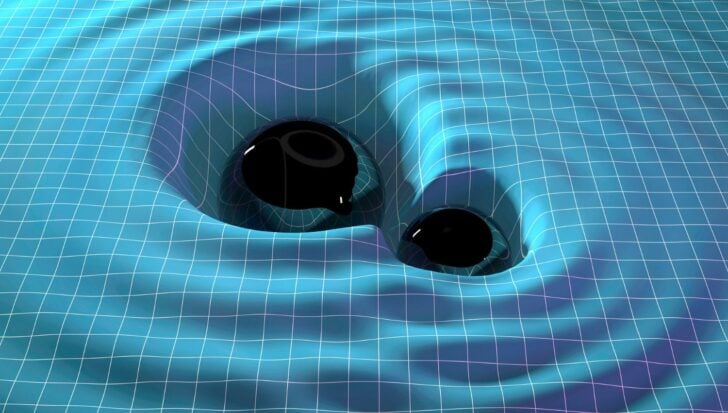
Not even black holes can resist each other’s pull.
If two black holes orbit one another, they can spiral inward and merge into a single, larger black hole.
These collisions release enormous energy in the form of gravitational waves, which instruments like LIGO can detect.
Some black holes can help create new stars.
Black holes may be formed at the death of a star, but some of them can also lead to the birth of a new one.
This phenomenon is seen in the Phoenix galaxy cluster, where observations suggest the central black hole isn’t preventing gas from cooling the way many do.
Instead, large amounts of gas can cool and collapse, fueling unusually high rates of star formation.
Black holes are still full of mysteries, but scientists have learned a lot about how they form and how they behave.
Even though they can distort time, merge in spectacular collisions, and reshape their surroundings, most black holes are far away and harmless to us.
So, the next time a movie features a black hole, you’ll know the science is weirder than the special effects.