Disney’s character Pluto first appeared in 1930, the same year the planet Pluto was discovered. The dog was later given his name in reference to the newly discovered planet.
Mars’ volcano Olympus Mons is the tallest mountain in the Solar System, rising about 17 miles (27 kilometers) high, more than twice the height of Mount Everest.
The Subaru car company’s name and logo are based on the Pleiades star cluster, which is called Subaru in Japanese.
Uranus is the third-largest planet in the Solar System, after Jupiter and Saturn.
One of the most massive known stars in the universe, BAT99-98, burns about five million times brighter than the Sun and lies within the Large Magellanic Cloud.
Your smartphone has more computing power than the computer NASA used to send astronauts to the Moon during the Apollo 11 mission.
Omega Centauri is the most massive globular cluster of stars in the Milky Way and is believed to have originally been the core of an ancient dwarf galaxy.
Uranus was the first planet ever discovered with a telescope.
Regular pens don’t work in space, as gravity is required for ink to flow. Astronauts use a pen called the Space Pen, which is designed to work in almost any environment.
Saturn is the only planet in the Solar System light enough to float in water, since its overall density is lower than that of water.
The furthest thing you can see is the Andromeda Galaxy, which can be faintly made out with the naked eye under the right conditions.
During the Apollo 10 mission, astronauts found a floating turd in the cabin on two separate occasions, but no one ever admitted to it.
Gravitational waves were first detected on September 14, 2015, originating from the collision of two massive black holes about 1.3 billion light-years away.
The tallest astronauts to travel to space are James D. Wetherbee and James van Hoften, both standing 6 feet 4 inches (1.93 meters) tall.
Since at least the late 19th century, Jupiter’s Great Red Spot has been shrinking in length and becoming more circular in shape.
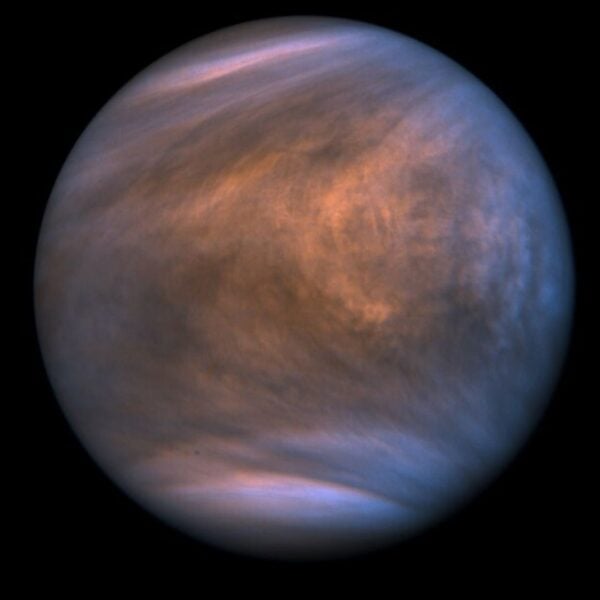
In 1982, the Soviet Venera 13 lander survived on Venus for 127 minutes, the longest any spacecraft has lasted on the planet’s surface.
The only two planets that pass between the Earth and the Sun are Mercury and Venus.
NASA, the European Space Agency, and the Canadian Space Agency worked with 14 countries and 300 universities to develop the James Webb Space Telescope.
Félicette, the French Cat, was the first and only cat to travel to space and back.
Jupiter’s moon Europa is covered by a layer of ice, beneath which scientists believe lies a vast ocean of liquid water.
The world’s first practical telescope was invented in 1608 by Dutch lensmaker Hans Lipperhey.
In 1998, John Glenn became the oldest person to orbit Earth at age 77. He had first made history in 1962 as the first American to orbit the planet.
The Sun is just one of hundreds of billions of stars in the Milky Way, which is one of the trillions of galaxies in the universe.
Despite its small size, Mercury is the second most dense planet in the Solar System, surpassed only by Earth.
The Sun is a ball of plasma, not a solid surface. Its equator spins once every 25 days, and its poles turn once every 35 days.
Jupiter has more than 95 known moons, and with improved technology, we continue to discover even more orbiting the giant planet.
Mercury’s surface can reach temperatures of up to 430°C (800°F), yet the planet continues to cool. This slow cooling causes Mercury to shrink slightly over time.
Excluding Ceres, which is also a dwarf planet, 4 Vesta is the largest known asteroid in our Solar System with a diameter of 326 miles (525 km).
The air pressure on the surface of Venus is about 90 times greater than the pressure at Earth’s surface.
The Sun has only completed around twenty orbits around the Milky Way, as each trip around takes 240 million years!
The eight planets in the Solar System line up once every 396 billion years.
HD 140283, nicknamed Methuselah, formed about 13.7 billion years ago, shortly after the Big Bang, and is among the universe’s oldest known stars.
In space, you become about 5.1 cm (2 inches) taller since the absence of gravity no longer compresses your spine.
A sample from the apple tree that inspired Sir Isaac Newton’s theory of gravity was taken to space aboard NASA’s Atlantis space shuttle.
A blue moon traditionally means the third full moon in a season with four, but today it often refers to the second full moon in a month.
If you could drive your car to the Moon right now, it would take you about six months to get there at an average speed of 60 miles per hour (95 kilometers per hour).
The Fermi Paradox is the question of why we have not found evidence of intelligent alien life despite the vast size of the universe.
Because of its extreme tilt and long orbit around the Sun, each season on Uranus lasts about 21 Earth years.
According to NASA’s Kepler mission, there is at least one planet for every star in the Milky Way, meaning the galaxy may contain 100 to 400 billion planets.
Tombaugh Regio, the giant heart-shaped area on Pluto, spans approximately 1,000 miles (1,609 kilometers) and features a bright, icy plain called Sputnik Planitia.
Jupiter was once thought to have no rings, but the Voyager spacecraft revealed its faint ring system during a flyby in 1979.
In microgravity, fluid shifts toward the head, causing astronauts to experience nasal congestion, sinus pressure, and facial puffiness.
The dwarf planet Ceres is the largest object in the asteroid belt, making up about 25% of the belt’s total mass, and it is the only dwarf planet in the inner solar system.
The International Space Station orbits Earth at about 17,500 miles per hour (28,000 kilometers per hour), circling the planet roughly every 90 minutes.
A light year is the distance light travels in one year, measuring about 5.88 trillion miles (9.46 trillion kilometers), and it is a unit of distance, not time.
In 2008, a Buzz Lightyear toy spent 15 months aboard the International Space Station as part of an educational partnership between NASA and Disney Pixar.
Mercury and Venus are the only two planets in the solar system that do not have any moons.
Saturn’s moon Enceladus reflects nearly 100% of the sunlight that strikes it and has an average surface temperature of around -193 °C (-316 °F).
The Whirlpool Galaxy (M51), discovered by Charles Messier in 1773, was the first galaxy identified with a spiral shape.

Because Mars has much lower gravity than Earth, a person who weighs 160 pounds on Earth would weigh about 61 pounds on Mars.
On July 9, 1962, the United States detonated a hydrogen bomb in space during the Starfish Prime test, an explosion about 100 times more powerful than the bomb dropped on Hiroshima.
Saturn’s moon Mimas bears a striking resemblance to the Death Star from “Star Wars” thanks to an enormous crater called the Herschel Crater.
Discovered in 2003, Cupid is a small inner moon of Uranus with an estimated diameter of about 11 miles (18 kilometers).
Not all planets orbit a star. Rogue planets, or wandering planets, freely float around the universe with no strings attached.
The Sun’s outer atmosphere, called the corona, can reach about 2 million °C, making it over 360 times hotter than its 5,500 °C surface.
It takes about eight minutes and twenty seconds for light to travel from the Sun to Earth.
A person could survive in space without a spacesuit, but only for 10–15 seconds before losing consciousness due to a lack of oxygen.
In 2013, over 200,000 people applied for Mars One’s one-way mission to Mars, but the project was later canceled after going bankrupt in 2019.
In 1959, NASA selected its first astronauts from military pilots with engineering backgrounds, who were required to be under 5 feet 11 inches tall to fit inside the Mercury spacecraft.
Pluto was named by eleven-year-old Venetia Burney from England, who suggested the name after the Roman god of the underworld.
A magnetar is a rare type of neutron star with a magnetic field about a thousand times stronger than usual, capable of tearing apart anything nearby.
About sixty-three Earths could fit inside Uranus, so yes, it is absolutely massive.
Uranus is the only planet named after a figure from Greek mythology, taking its name from Ouranos, the ancient Greek god of the sky.
The Soviet Union’s Mir space station spent 5,511 days in orbit, and was occupied by cosmonauts for 4,592 of those days.
The Sun’s core reaches about 15 million °C (27 million °F), where hydrogen fuses into helium, releasing the immense energy that lights and warms our solar system.
According to the International Astronomical Union, asteroid names should be short, preferably one word, and naming them after pets is discouraged.
At the center of the Milky Way lies a supermassive black hole called Sagittarius A*, with a mass about four million times that of the Sun.
Mars’ surface has been more thoroughly mapped than Earth’s ocean floor.
Space apparently smells like seared steak, hot metal, and welding fumes. This smell lingers on the spacesuits of astronauts after they perform spacewalks.
It takes about seven months to travel the roughly 300 million miles (480 million kilometers) between Earth and Mars.
NASA’s Voyager 2 made the first and only visit to Uranus in 1986, capturing all of our close-up images and data of the planet.
After walking on the Moon, many Apollo astronauts developed symptoms similar to hay fever, caused by sharp, microscopic particles of lunar dust that irritated their lungs.
Humanity went from launching the first person into space to walking on the Moon in just ten years.
The darkest known planet in the universe is TrES-2b, a Jupiter-sized planet in the Draco constellation, which reflects less than 1% of the light that hits it.
Mercury’s axis tilts less than one degree, but its oval-shaped orbit causes temperature changes similar to seasons on Earth.
Out of more than 77,000 recognized meteorites found on Earth, only around 400 have been identified as coming from Mars.
The International Space Station is the largest human-made structure ever assembled in space, measuring approximately 358 feet (109 meters) in length.
Humans were not the first living creatures in space; fruit flies earned that title when they were launched aboard a U.S. rocket in 1947 to study radiation exposure.
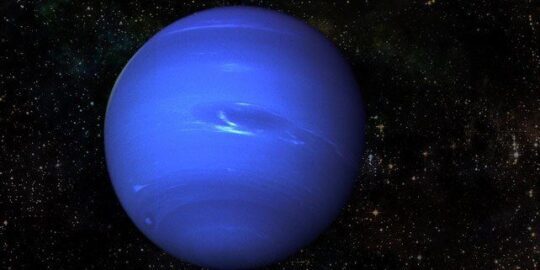
Neptune’s moons follow a water theme, taking their names from sea gods, water nymphs, and the children of Neptune in Roman mythology.
The Mars Curiosity rover is about the size of a small car, measuring roughly 10 feet (3 meters) in length and 7 feet (2 meters) in height.
Space telescopes, such as Hubble and the James Webb Space Telescope, allow us to look back in time, capturing light that originated from distant objects billions of years ago.
On December 17, 2024, Chinese astronauts Cai Xuzhe and Song Lingdong set a new spacewalk record of 9 hours and 6 minutes during China’s Shenzhou-19 mission.
NASA’s space shuttles, flown from 1981 to 2011, reached orbit in just eight and a half minutes, reaching speeds of up to 17,500 miles per hour.
The Sun has no solid surface; it is most dense at its core, with its density gradually decreasing toward the outer layers.
In the 3rd century BC, the Greek astronomer Aristarchus of Samos proposed that the Earth and other planets revolve around the Sun.
If you fell into a black hole, the immense gravity would stretch you out like spaghetti, a process scientists call “spaghettification.”
Roughly half of all stars like our Sun have a companion star, and larger stars are even more likely to form in pairs or groups.
The dense, hot atmosphere of Venus would change how sound waves behave, so your voice would sound quite different from how it does on Earth.
Mira, a star in the Cetus constellation, varies in brightness throughout the year. For a few days every year, it can be 1,700 times its normal brightness.
Uranus spins on its side with an axis tilted about 98 degrees, meaning its poles point nearly where most planets’ equators do.
In 1840, German astronomers Wilhelm Beer and Johann Heinrich Mädler created the first comprehensive map of Mars.
The element uranium, discovered in 1789, was named after the planet Uranus, which had been discovered just eight years earlier.
Stars appear to twinkle because their light is slightly distorted as it travels through Earth’s atmosphere.
Red dwarfs make up about 70-75% of all stars in the Milky Way, making them the galaxy’s most common star type.
Halley’s Comet passes by Earth roughly every 75 years, making it the only known comet bright enough to be seen with the naked eye twice in a single lifetime.
Like Earth, Mars has permanent ice caps at its north and south poles.
Studies show that people tend to sleep less and go to bed later in the days leading up to a full moon.
Mercury retrograde is a very real thing, but the idea that it affects human life is not supported by science.