
Anyone who has gone camping will tell you just how much fun it is. Time outdoors gives you a break from busy routines and allows you to connect with nature. But did you know that it can also be great for your health?
Between natural light, fresh air, and the gentle push to move more, camping can support your body and your mood in surprisingly practical ways.
From better sleep to a calmer mind, these facts break down some of the most talked-about benefits and why they happen.
Camping can support better sleep by nudging your circadian rhythm back toward a natural schedule.

Our bodies run on an internal clock called the circadian rhythm, which helps regulate sleep and wake times.
Unfortunately, for many of us living fast-paced lives with busy schedules, this internal clock can become disrupted. When your days are spent indoors under artificial lighting, that timing can drift later than you’d like.
Camping typically means brighter days and darker nights, which may help your body’s clock line up more closely with sunrise and sunset. That shift can make it easier to feel sleepy at night and more alert in the morning.
Camping can feel like a built-in stress reliever.

Did you know that just spending 20-30 minutes outdoors can significantly reduce your body’s level of cortisol, the stress hormone?
It can also help calm down your body’s sympathetic nervous system, which is responsible for the fight or flight response.
A camping trip stretches that calming time out for hours, giving you space to slow down and step away from constant noise and notifications.
With fewer distractions, it’s often easier to breathe deeper, notice your surroundings, and fully unplug for a while.
Camping often adds extra movement to your day without feeling like a workout.

Between pitching a tent, carrying gear, gathering supplies, and walking around camp, you tend to stay more active than you would at home.
Many trips also include activities like hiking, cycling, swimming, or exploring nearby trails
Over time, that extra movement can support circulation and cardiovascular health.
And the best part is that because it happens outdoors, it can feel less like “exercise” and more like part of the adventure.
Camping can help to boost vitamin D levels.

Vitamin D is an essential nutrient that supports vital bodily functions, such as bone health. The good thing is your body can make Vitamin D itself; it just needs one crucial component, sunlight.
When you go camping, you’re likely spending more time outdoors than you typically do, so it can be an easy way to get natural light.
Just keep in mind that vitamin D production varies a lot depending on season, location, skin tone, and sun protection.
Camping makes it easier to cut screen time without forcing it.
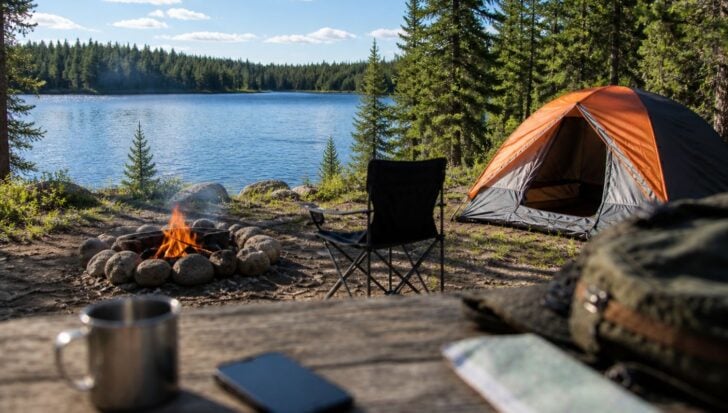
In the U.S., the average daily screen time is often reported to be just over 6 hours, and some younger adults say they spend 9-12 hours on screens per day.
Unfortunately, too much screen time can negatively affect your body, causing symptoms such as eye strain and neck and back pain. It can also be bad for mental health as heavy screen habits are often associated with poorer mental well-being.
Camping gives you a natural reason to step away. You can leave non-essentials behind, and when your day is filled with trails, meals, and camp tasks, it’s easier to forget about the scrolling.
Camping with friends can strengthen social bonds, which is strongly linked to better well-being.

When you camp with friends, you’re not just sharing a campsite; you’re sharing meals, tasks, laughs, and problem-solving, which naturally builds connection.
That matters because strong social relationships are consistently linked with better health and well-being outcomes overall.
Even something as small as roasting marshmallows over the fire turns into an easy, shared moment that brings everyone together.
Camping is also set up for “quality time” by default, with fewer distractions, more face-to-face conversation, and shared experiences you’ll actually remember.
Camping can boost your mood and help you feel more grounded.
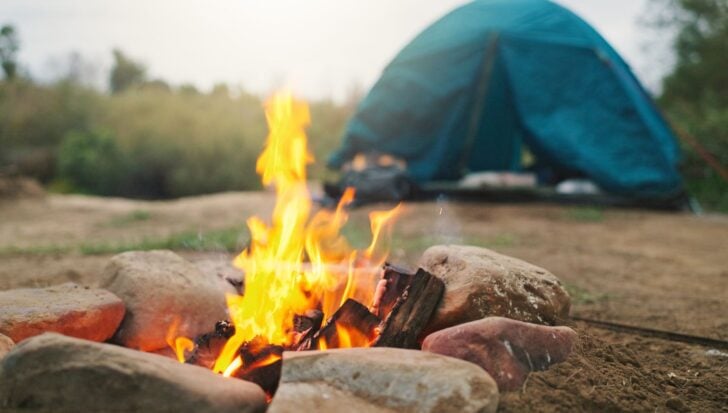
Camping has so many amazing mental health benefits, such as helping to reduce anxiety and depression, while improving mood.
In a large survey of 11,000 people, 97% of campers said “happiness” was their top motivator for going camping. Spending time outdoors can trigger the release of hormones like serotonin and dopamine, which help elevate your mood.
The combination of the calm outdoor environment, increased physical activity, and reduced stress helps support mental well-being.
Additionally, going with friends or family can add connection and laughter, which can be just as restorative as the scenery.
Camping can give your brain a break, which may help you think more clearly.
Camping isn’t just good for your body; it’s great for your mind! When your environment is quieter, and your attention isn’t constantly pulled by alerts, it can feel easier to focus.
Many people also find that time outdoors helps reduce mental fatigue and improves clarity. It’s also associated with improved focus and memory.
On top of that, camping naturally builds practical skills, from planning and navigation to problem-solving when things don’t go as planned.
Camping isn’t just fun; it can be good for your body and mind, too.
More natural light, more movement, and less screen time can help you feel calmer, sleep better, and reset your routine in a healthy way.
Plus, the simple act of being outside, whether you’re solo or with friends, can make a weekend feel genuinely refreshing.