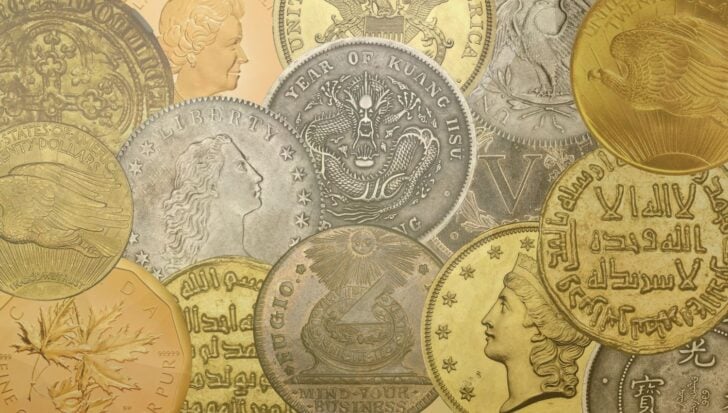
Coins have served primarily as a practical way to pay for goods and services and as a means to store wealth.
While many coins are valuable simply because they’re made from expensive precious metals, some are worth way more than their face value. These special coins may get this extraordinary status because they’re historically significant, really old, rare, or even in high demand.
However, what’s more interesting is that some of these coins come with really remarkable stories!
If you’d like to learn some of the fascinating facts and stories about the world’s most valuable coins, keep reading.
Only three examples of England’s 1344 Edward III Florin are known to exist.
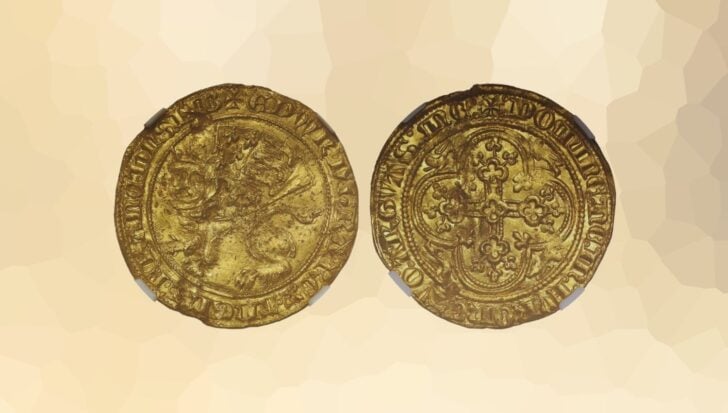
The Edward III Florin was minted in January 1344 from 23-carat gold and was worth about 6 shillings at the time.
It’s nicknamed the “double leopard” because it shows Edward III seated with two leopards, while the reverse features a cross with a quatrefoil and four leopards.
Not long after these coins were released, they were recalled due to the incorrect tariff placement. Today, only three known copies of this coin remain, and one even sold in 2006 for £460,000 (roughly equivalent to $850,000 at the time).
A 1913 Liberty Head nickel became the first coin to sell for more than $100,000.
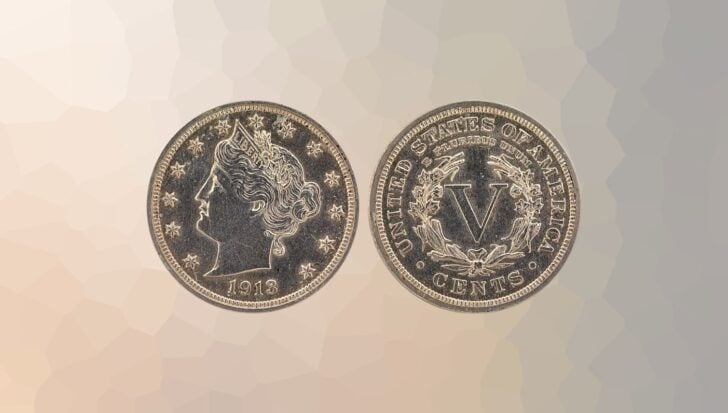
Surprisingly, the 1913 Liberty Head Nickel coins were never authorized by the US Mint, so they never entered circulation. They weren’t publicly known until 1919, when one appeared at a meeting of the Chicago Coin Club.
All five known examples were once handled by Samuel Brown, a former Mint employee who promoted them in the early 1920s.
Exactly how they were made is still debated; some speculate that Brown made these coins himself in secret, others believe they might have been part of a forgotten batch of test coins.
These coins made history in 1972 as the first 5-cent coins to sell for over $100,000. However, the value of the 1913 Liberty Head Nickels has since skyrocketed, reaching millions of dollars.
The 1794 Flowing Hair Silver Dollar is the first silver dollar struck by the US Mint.
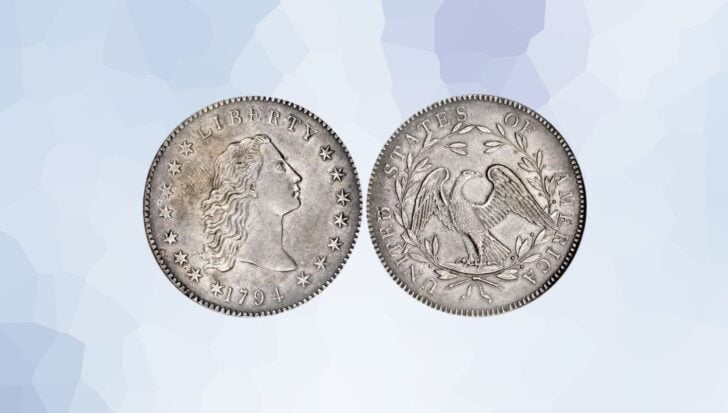
Designed by Robert Scot, the coin shows Liberty with flowing hair, while the reverse features an eagle framed by a wreath.
Today, these coins are considered one of the great prizes of American coin collecting.
One 1794 Flowing Hair Silver Dollar was sold at an auction on January 24, 2013, for just over 10 million US dollars.
The Fugio cent is widely considered the first official circulation coin of the United States.
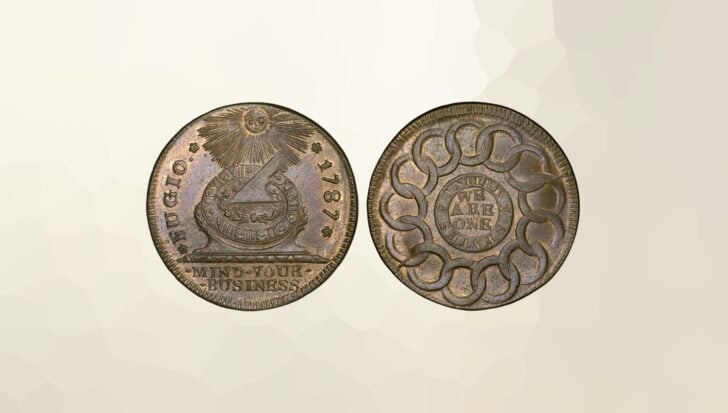
The Fugio cent, also known as the Franklin cent, dates to 1787. Benjamin Franklin is often credited with inspiring its design.
On one face, it has the sun shining on a sundial with the phrase “Mind Your Own Business” at the bottom. The word Fugio, meaning “flying” in Latin, is inscribed on this side.
The reverse reads “We Are One,” surrounded by 13 linked rings representing the original colonies.
While the Fugio cent might not be among the most expensive coins, it’s still considered incredibly valuable by collectors.
The Umayyad gold dinar, dated to 723/724 AD, is among the earliest Islamic coins to name a location in Arabia.
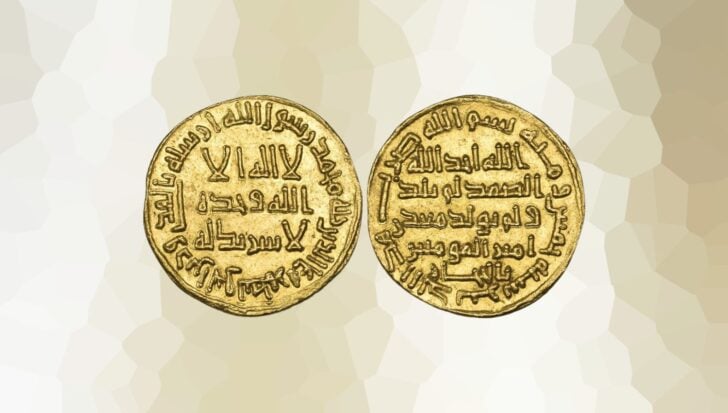
Only about a dozen examples are believed to exist, making it exceptionally rare. On the back of the coin is the inscription, “Ma‘din Amir al-Mu‘minin bi’l-Hijaz”, which means “Mine of the Commander of the Faithful in the Hijaz”.
According to historians, the wording likely refers to a gold mine in the Hijaz region, associated with the area around Mecca, where the gold was sourced.
This is unlike other Islamic coins from the era, which typically contain religious quotes from the Quran or details of the mint. On October 24, 2019, one of these coins was sold for £3.72 million, equivalent to $4.78 million at the time.
The 1903 Fengtien Tael set a record as the most expensive Chinese coin sold at auction.
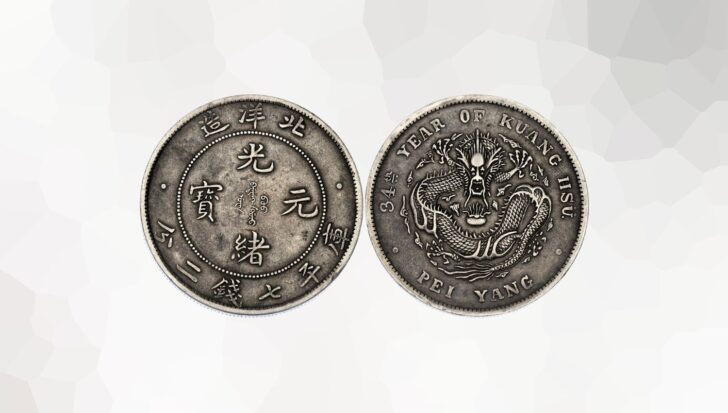
Often nicknamed the “King of Chinese coins,” it was minted at the Mukden (Fengtien) Mint.
From there, the coin made its way to an exhibition in St. Louis, Missouri, in the United States in 1904. It was purchased by Edward Kann in 1952 for $2,000 and would change hands several times over the years, each time going up in price.
In 2022, the 1903 Fengtien Tael was sold for 46,575,000 RMB, or about 6.9 million US dollars at the time.
Thieves used a wheelbarrow to steal a 220-pound Big Maple Leaf coin.
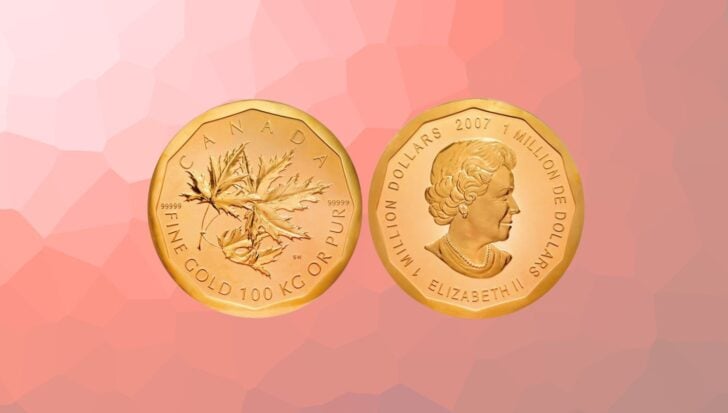
In 2007, the Royal Canadian Mint produced five massive coins, each with a face value of $1 million. According to the BBC, they measured about 21 inches (53 cm) across, about 1.2 inches (3 cm) thick, and weighed 220 pounds (100 kilograms), with a purity of 99.999% gold.
On March 27, 2017, thieves broke into Berlin’s Bode Museum and stole one of the coins. Investigators said they moved the hefty coin with the help of a wheelbarrow, and while the thieves were later caught, the coin was never recovered.
For decades, it was illegal for collectors to own a 1933 Double Eagle.
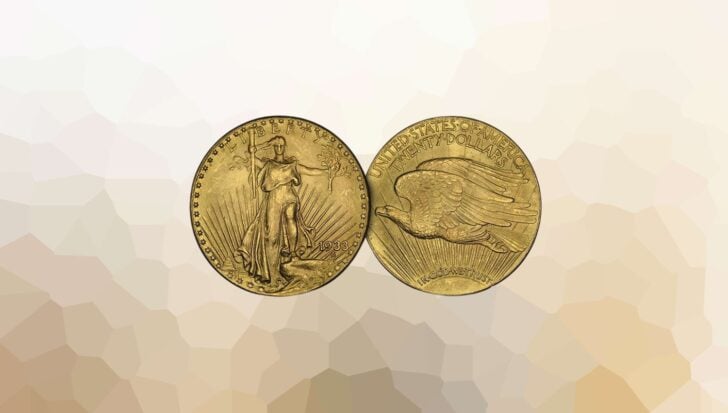
Although 445,500 of the Double Eagle Gold coins were struck, none were officially released. Almost all were ordered destroyed, though a number were unlawfully removed from the Mint.
For decades, the U.S. government treated privately held examples as stolen property.
One specimen was later legalized under a settlement, bought by Stuart Weitzman, and resold by Sotheby’s in 2021 for $18.872 million, a record price for a coin.
Only one authentic copy of the 1849 Double Eagle coin is known to exist.
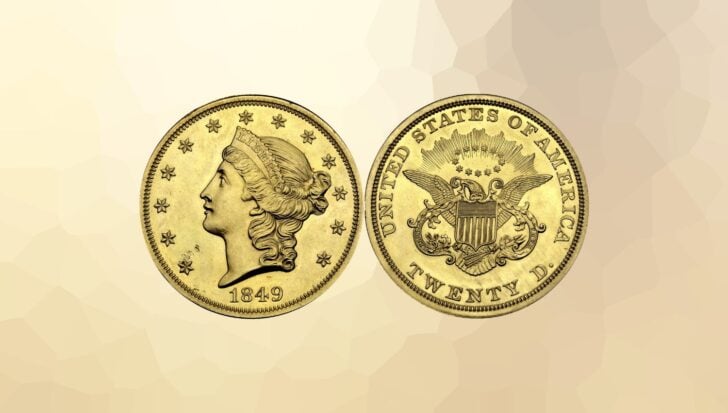
The 1849 Double Eagle coin was the first $20 coin issued by the US Mint. Unfortunately, it never reached full production.
Initially, it was believed that two specimens of this coin were made. One of them was handed over to the Treasury Secretary, William M. Meredith, but no one knows what happened to it after that.
The second coin, and only known specimen, is safely tucked away in the Smithsonian. Since this is the only known copy, and it’s not for sale, any other 1849 Double Eagle coin offered on the market is most likely a replica.
Production of the high-relief 1907 Gold Saint-Gaudens Double Eagle coins was stopped because the process was too difficult.
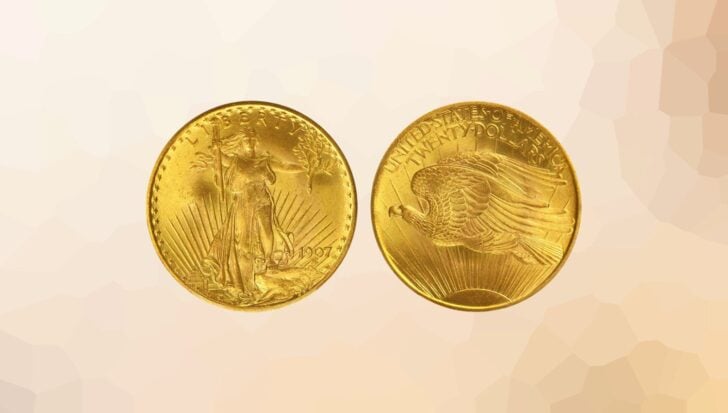
These coins were designed by the famous American sculptor, Augustus Saint-Gaudens. Unfortunately, producing each of these beautiful coins required at least 9 stampings, which was expensive and time-consuming.
It’s generally believed that less than 24 of these coins were made before the design was revised. The new design reduced the relief and required only three stampings.
In 2021, one of the ultra-high-relief 1907 Gold Saint-Gaudens Double Eagle coins sold for $4.75 million in a private auction to an anonymous buyer.
Many of the world’s most valuable coins are incredibly rare, with only a few pieces available for collectors to chase.
However, being rare and expensive isn’t the only interesting thing about them.
Many also come with some of the most fascinating stories of heists, secret productions, and even cases where owning them was illegal.