
Despite being one of the largest religions in the world, Sikhism is sometimes less well-known or misunderstood. Some Sikhs, especially observant Sikh men who wear turbans and keep full beards, are even mistaken for Muslims or Hindus.
However, Sikhism is an entirely distinct religion with its own set of beliefs and traditions.
If you’d like to learn more about what it means to be Sikh, keep reading. These interesting facts about Sikhism will help you gain a deeper appreciation for the religion.
Sikhism is over 500 years old.
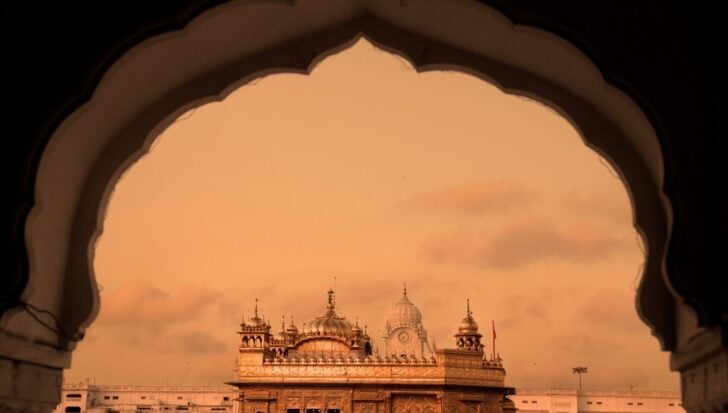
Sikhism began in the late 15th and early 16th centuries in the Punjab region of the Indian subcontinent, which is now divided between modern-day India and Pakistan. Guru Nanak, who founded the religion, was born in 1469 into a Khatri family in Punjab.
According to Sikh tradition, he questioned religious rituals from a young age, including the sacred thread ceremony, an upper-caste Hindu rite. After a profound spiritual experience, Guru Nanak began sharing a message centered on devotion to one God, equality, honest living, and service to others.
Over the years, he traveled widely to share his teachings. Guru Nanak gained many followers and eventually passed leadership to Guru Angad, the second Sikh Guru.
It’s the fifth-largest religion in the world.

Sikhism has approximately 25 million followers around the world and is often described as the fifth-largest organized religion, after Christianity, Islam, Hinduism, and Buddhism.
More than 20 million Sikhs live in India, making up roughly 80-85% of the global Sikh population.
Today, Sikh communities can be found in many countries around the world, including Canada, the United Kingdom, the United States, Australia, Malaysia, and Singapore.
Sikhs believe in one God.
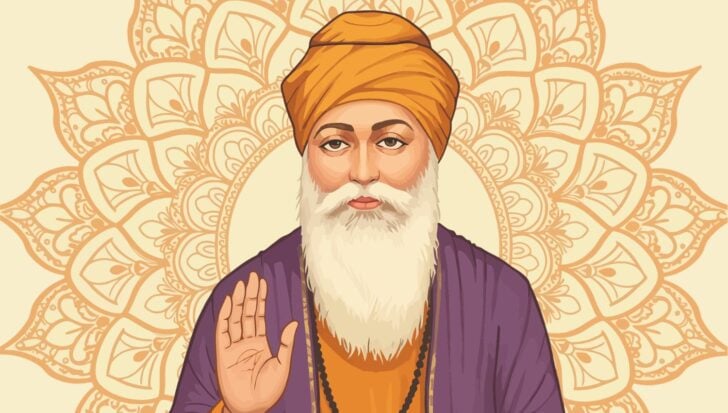
Sikhism is a monotheistic religion, meaning Sikhs believe in one God who is present throughout creation. This belief is expressed in the phrase Ik Onkar, often translated as “One supreme reality” or “There is one God.”
Sikhs commonly refer to God as Waheguru, which can be translated as “Wonderful Lord” or “Wondrous Enlightener.”
While Sikhs are deeply devoted to their faith, Sikhism also teaches respect for other religious paths. The religion does not emphasize aggressive proselytizing or forced conversion, but people who freely choose to become Sikh are welcomed into the community.
Sikhs have five special items that they must carry at all times.

Initiated Sikhs, also known as Amritdhari or Khalsa Sikhs, wear or maintain five articles of faith known as the Five Ks. These are important expressions of commitment to Sikh values and identity.
- The first is Kesh, or uncut hair, which reflects acceptance of God’s creation.
- The second is Kangha, a wooden comb used to keep the hair clean and well-maintained.
- The third is Kara, an iron or steel bracelet that serves as a reminder of God, ethical conduct, and commitment to the Sikh community.
- The fourth is Kachhera, a cotton undergarment associated with discipline, modesty, and readiness.
- Finally, there is the Kirpan, a religious blade that represents a Sikh’s duty to defend the vulnerable and stand against injustice.
Many observant Sikhs keep their hair uncut.
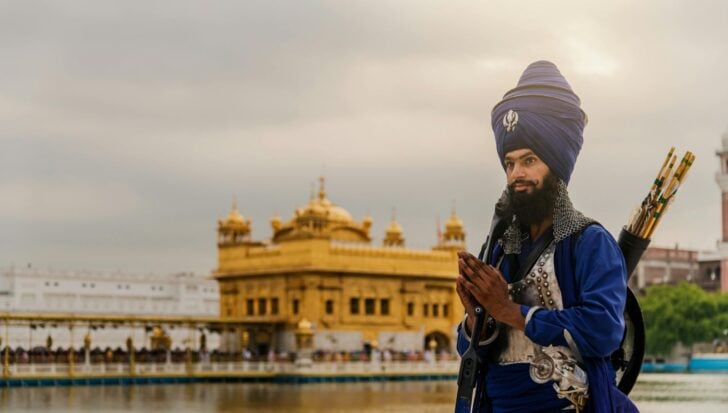
One important Sikh teaching is that the body is a gift from God and should be respected in its natural form. For this reason, initiated Sikhs are expected to keep their hair uncut and untrimmed, including facial and body hair.
Piercings and other permanent body modifications are also generally avoided by strictly observant Sikhs.
However, levels of practice vary, and many people who cut their hair still identify as Sikh and remain part of the Sikh community.
The Sikh sacred scripture is regarded as the eternal Guru.

In Sikhism, Gurus are spiritual teachers and guides. Guru Nanak was the first Sikh Guru, and after him came nine other human Gurus, making ten in total.
Before the tenth Guru, Guru Gobind Singh, passed away, he declared the Guru Granth Sahib, the Sikh sacred scripture, to be the eternal Guru.
This meant there would be no further human Gurus, and Sikhs would turn to the Guru Granth Sahib as their highest spiritual authority.
Sikhs often use the same last name.
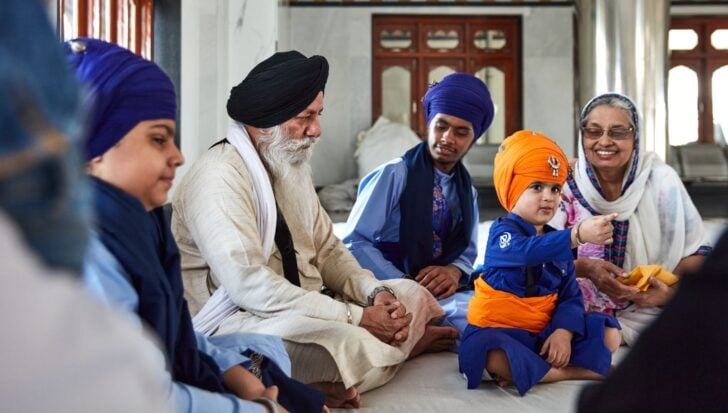
From the beginning, Sikhism rejected the caste system, which divided people into rigid social classes. Guru Nanak taught that all people are equal before God, and no one is higher or lower by birth.
In many South Asian communities, a person’s family name could signal their caste background. To challenge this, Guru Gobind Singh gave Sikh men the name Singh, meaning “lion,” and Sikh women the name Kaur, often translated as “princess” or associated with royalty and sovereignty.
Many Sikhs still follow this tradition today, though some use Singh or Kaur as a middle name, and others also keep a family surname.
Sikhs are encouraged to share their earnings and serve others.

A key Sikh practice is Dasvandh, which means giving one-tenth of one’s honest earnings to support others. Many Sikhs donate this portion to gurdwaras, langar, community welfare, education, disaster relief, or other charitable causes.
Sikhs are also taught to practice Seva, or selfless service. This can mean giving time, effort, and skills to help others, such as volunteering in a community kitchen, supporting a shelter, or helping people in need.
Canadian Sikhs have built one of the country’s largest blood donation campaigns.

The Sikh Nation blood donation campaign began in the late 1990s and has grown into one of Canadian Blood Services’ largest donor groups in the country. Each year, the campaign brings together thousands of donors and more than 10,000 volunteers across Canada.
Since the campaign began, Sikh Canadians involved in the effort have helped save thousands of lives. For many participants, donating blood is a meaningful form of Seva, or selfless service, and a way to support the wider community.
The Sikh place of worship has a free kitchen.
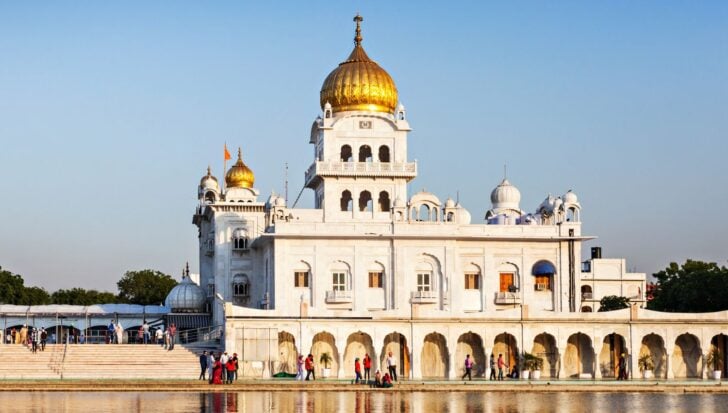
The Gurdwara is the Sikh place of worship, learning, and community gathering. The name means “doorway to the Guru.”
Inside, the main worship space, often called the darbar hall, is where people gather to listen to hymns from the Guru Granth Sahib, pray, and reflect on Sikh teachings.
Most gurdwaras also have Langar, a free community kitchen and meal open to everyone, regardless of religion, background, or social status. People sit together, traditionally on the floor, and are served the same meal as a sign of equality.
At the Golden Temple in Amritsar, one of Sikhism’s most important gurdwaras, the langar feeds tens of thousands of people every day, sometimes reaching up to 100,000 visitors on especially busy days.
Sikhism is one of the youngest major world religions, founded over 500 years ago in Punjab. Today, Sikh communities can be found around the world, while the faith continues to be shaped by its core teachings of devotion to one God, equality, honest living, and service to others.
From Langar to Seva, Sikh practices reflect the belief that everyone deserves dignity, care, and respect, regardless of caste, gender, religion, or social status.