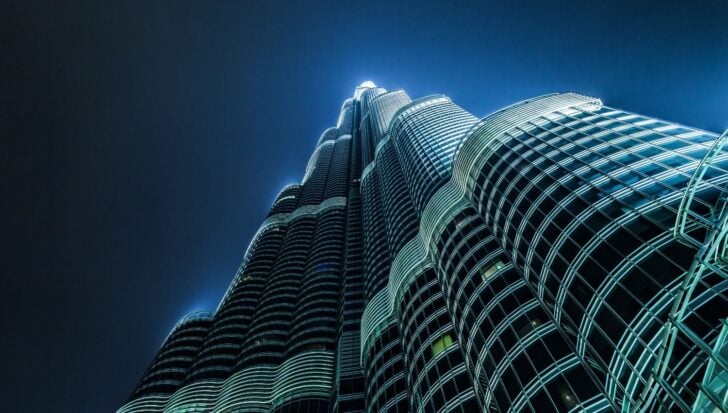
The Burj Khalifa is one of the most incredible marvels of human engineering.
When it opened in Dubai in 2010, people around the world were stunned by its height. But there’s much more to this skyscraper than its record-breaking size.
From secret construction details to clever design choices, building the Burj Khalifa took years of planning, millions of work hours, and some seriously creative problem-solving.
These facts reveal the records, design choices, hidden details, and engineering tricks behind the world’s tallest building.
The Burj Khalifa holds multiple world records.
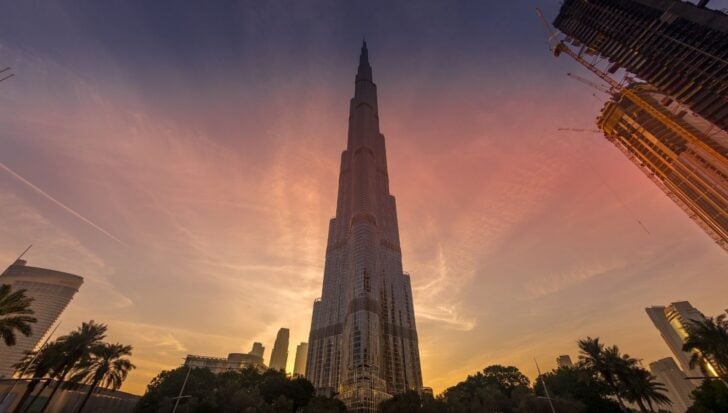
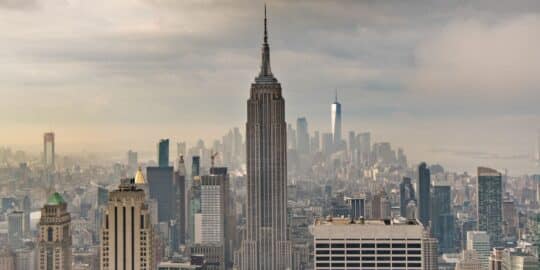
Standing at 2,717 feet (828 meters) tall, the Burj Khalifa is officially the world’s tallest building. To put that into perspective, it’s roughly three times the height of the Eiffel Tower and nearly twice as tall as the Empire State Building.
The Burj Khalifa earned that title in 2010, taking over from the 1667 ft (508 m) tall Taipei 101, which held the record for the world’s tallest building from 2004 to 2010. However, this isn’t the only record the Burj Khalifa broke.
It holds the title for the tallest structure ever built, the building with the most floors, and the highest elevator installation.
At the time of construction, it also broke the record for the highest restaurant inside a building. However, in 2022, Heavenly Jin broke that record at level 120 of the Shanghai Tower in China.
The Burj Khalifa took just six years to complete.
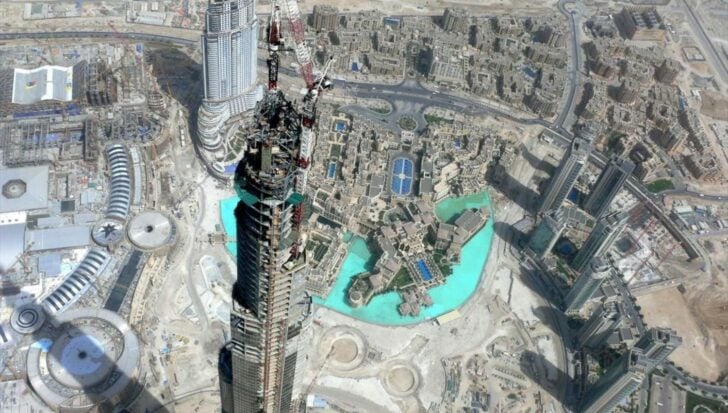
Work officially began in 2004 with the excavation of the site and the laying of the foundation. In the years that followed, workers turned up in their thousands every day at the site to help assemble the building.
Interestingly, despite so many people working on the project at the same time, specific details like the height of the building were kept secret from the public. By 2009, the major construction of the Burj Khalifa had been concluded.
On January 4, 2010, the building was officially opened, and its height was finally revealed.
The Burj Khalifa required about 22 million man-hours to build.
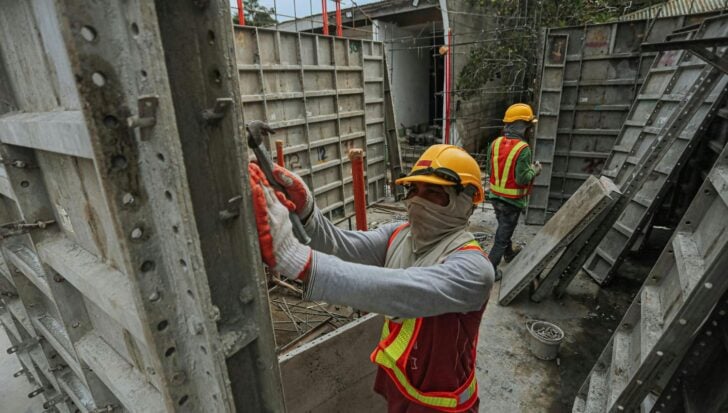
At the height of construction, the site operated on a huge scale, with more than 12,000 workers and contractors from over 100 countries working there.
The project also brought together more than 60 contracting and consulting companies from around the world, while the main construction joint venture included Samsung C&T, BESIX, and Arabtec.
This massive international effort helped turn the Burj Khalifa from an ambitious design into a reality after around six years of construction.
The Burj Khalifa’s design was inspired by a desert flower.
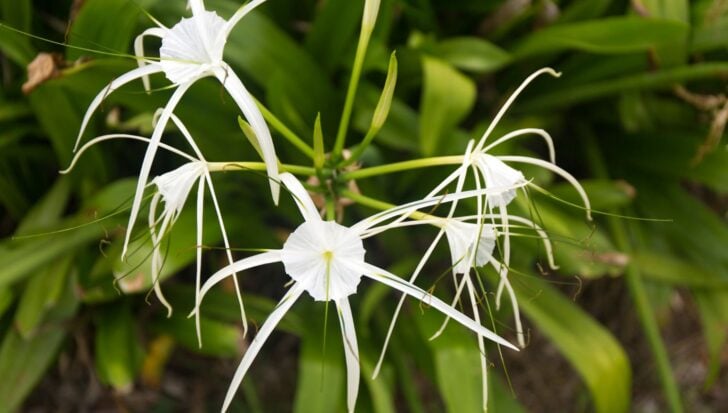
To really get the picture, you have to look at it from above. The floor plan of the Burj Khalifa was inspired by the Hymenocallis flower, or spider lily, a regional desert flower.
The base of the building has three lobes, just like the flower, but this design choice wasn’t just for aesthetics but to give the building stability.
Additionally, as it rises, it also becomes narrower to help it withstand heavy winds.
The Burj Khalifa attracts millions of visitors each year.
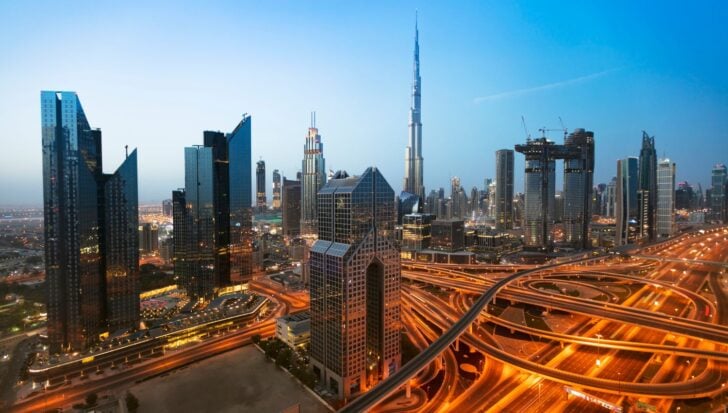
One reason the Burj Khalifa was built was to help strengthen Dubai’s economy, attract investors, and grow tourism beyond oil.
It has helped deliver on that goal as the centerpiece of Downtown Dubai, one of the city’s most valuable and visited districts.
In 2024, Dubai welcomed 18.72 million international overnight visitors, with 48% of them visiting the Burj Khalifa, and with ticket prices costing equivalent to around $50, the annual ticket sales can be roughly estimated at about $462 million, with the real figure likely higher once premium tickets and add-ons are included.
Access to the very top of the Burj Khalifa is restricted.
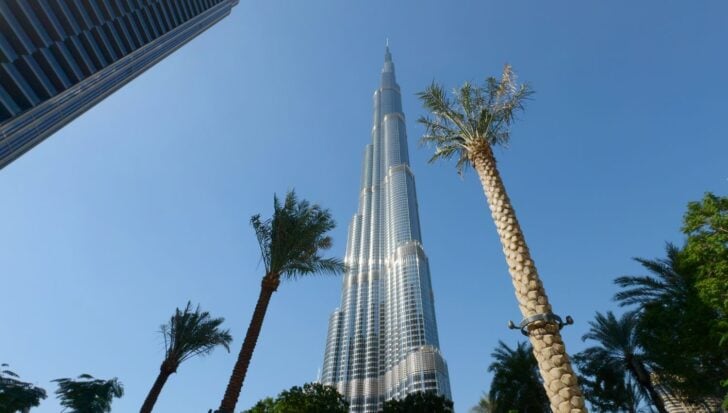
Most visitors only reach the public observation areas, including “At the Top” on Levels 124 and 125, At the Top SKY on Level 148, or The Lounge on Levels 152, 153, and 154.
The higher technical levels, roof areas, and spire are not open to regular visitors.
Only a small number of people have been allowed to reach the very top for special stunts, filming, or official events. These include Tom Cruise while filming Mission: Impossible – Ghost Protocol, French climber Alain Robert, Sheikh Hamdan bin Mohammed Al Maktoum, Will Smith, and YouTuber MrBeast.
The Burj Khalifa recovers 15 million gallons of water annually.
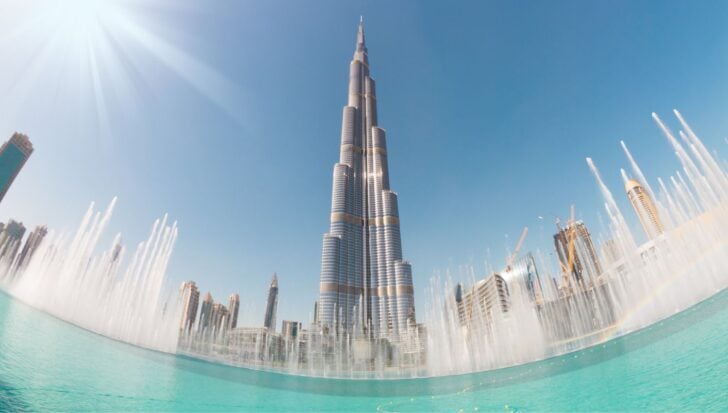
With so many floors and residents, water usage in the Burj Khalifa is through the roof, at about 250,000 gallons (946,000 liters) per day.
That’s a lot of pressure on the municipal water supply, but luckily, the developers thought of that and came up with a solution.
The Burj Khalifa has a special system that recovers water from the air conditioning, collects it, and reuses it for certain functions, such as irrigation.
Cleaning the Burj Khalifa’s exterior takes months.
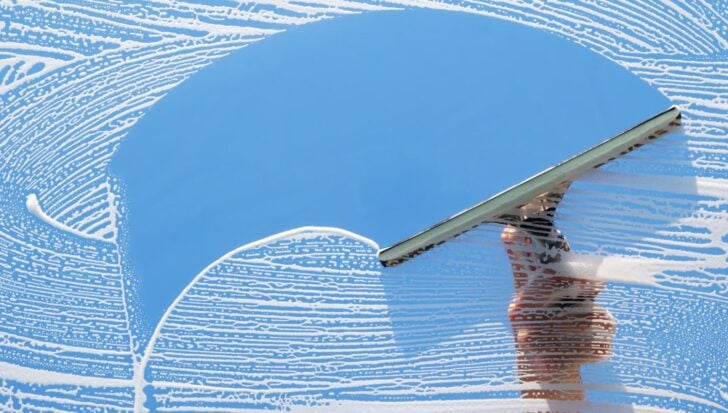
The tower’s facade is made up of close to 26,000 hand-cut glass panels, so keeping it clean is a huge job.
The building uses track-mounted units and manned cradles to maintain the exterior, rather than relying only on rope access and buckets.
According to Burj Khalifa’s official website, it normally takes three to four months to clean the entire exterior. Because of that long cycle, maintenance teams are often working on the tower almost continuously.
The Burj Khalifa was designed to handle strong winds and earthquakes.
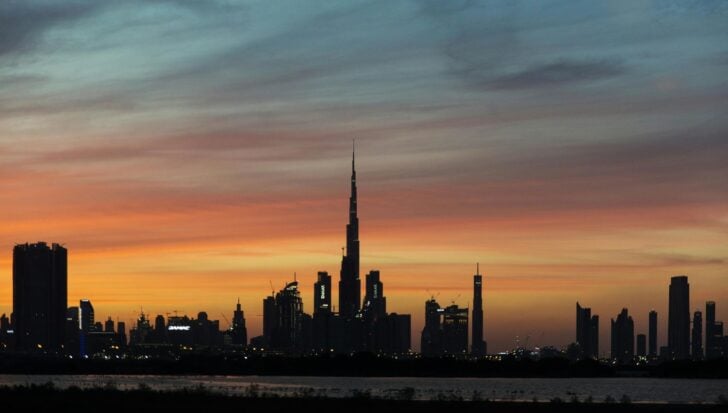
Although Dubai is not one of the world’s most earthquake-prone cities, the tower was built with a reinforced structural system and a deep foundation.
Its base sits on a 12.1-foot (3.7-meter) thick reinforced concrete mat, supported by concrete piles that are 4.9 feet (1.5 meters) wide and 141 feet (43 meters) long.
The tower’s Y-shaped, buttressed-core design helps keep the building stable, while its foundation supports the enormous weight above it.
Samsung C&T, one of the main contractors, says the Burj Khalifa was designed to withstand an earthquake of up to magnitude 7.
Ice-cooled concrete was used in the construction of the Burj Khalifa.
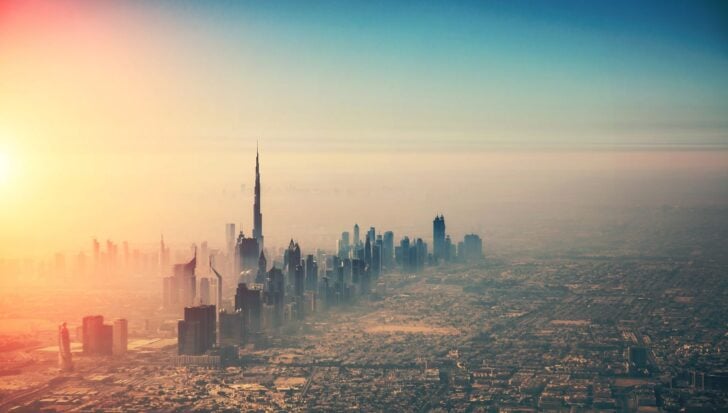
In building such a tall building, the construction team knew they needed exceptionally strong concrete. The problem was that in the hot desert, concrete can set or cure too quickly, making it more prone to cracking.
To fix this issue, they used flake ice in the concrete mix, so it would dry much more slowly and evenly.
Another trick they used was pouring concrete at night when the temperature was lower.
Building the Burj Khalifa was anything but simple. From its flower-inspired design to its ice-cooled concrete, every detail helped turn an ambitious idea into the world’s tallest building.
Today, it stands as one of Dubai’s most famous landmarks and a remarkable example of what creative engineering can achieve.